01TEMPERAMENT
Temperament
Kind, steady and people-focused dogs who can take part in family life.

HOW WE MAKE DECISIONS
WHAT WE BREED FOR
Kind, steady and people-focused dogs who can take part in family life.
Current health results and the limits of what any result can tell us.
Sound construction and movement that support an active, comfortable life.
The expression, coat, balance and character that make a Golden a Golden.
Intelligence and willingness to work with the people around them.
A realistic match for the homes, routines and responsibilities involved.
SELECTING A PAIRING
We start with the information available for each dog, then ask how the two records work together. That includes health results, pedigree, coefficient of inbreeding, temperament and the areas where each dog needs balance.
Daphne × Bonzo is the first example: Daphne brings warmth, intelligence and family character; the external stud Bonzo contributes strength, confidence and a broad set of international lines. The pairing is documented on its own page so the reasoning can be read in full.
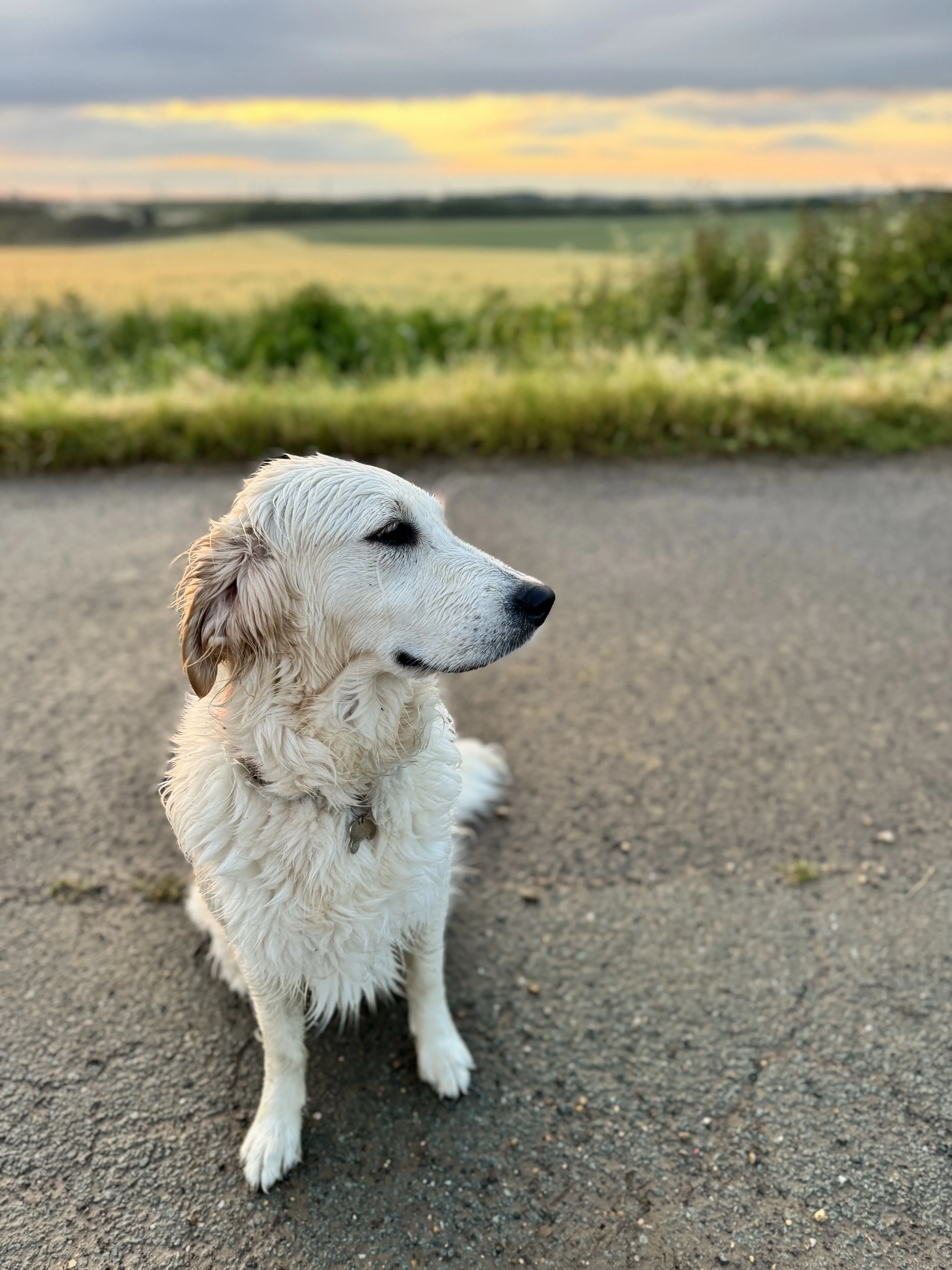
THE WHOLE DOG
HEALTH
Daphne, the dam, has hips scored 14/12, total 26, and the chosen sire Bonzo has 8/9, total 17. Both are recorded as 0/0 for elbows, with GR-PRA1, GR-PRA2 and ICT-A clear.
PEDIGREE
Named lines including Shardanell, Xanthos, Stanroph, Dewmist, Ipcress, Tramin and Erinderry sit inside a wider record that is read rather than reduced to badges.
TEMPERAMENT
A family dog needs more than a good photograph. We look for the confidence, sociability and willingness to engage that make training and everyday life possible.
COI
The Daphne × Bonzo coefficient of inbreeding is 5.1%. It is one measure of the pedigree, not a score for the dog.
The information is connected.
Health, heritage and behaviour are not separate departments. They are the evidence used to decide whether a pairing makes sense and what families should know about it.
THE FACTORS WE RECORD
01
HEALTH RESULTS
02
PEDIGREE AND COI
03
TEMPERAMENT
04
STRENGTHS AND WEAKNESSES
05
COMPATIBILITY
06
LONG-TERM GOALS
OUR RESPONSIBILITY
We take time to understand each household and make a match that works for the dog as well as the family.
Health information, pedigree context and the limits of the record should be easy to discuss.
Families should know where to turn as a puppy grows and life changes.
Breeding creates a responsibility toward every dog we bring into the world, not only during the first weeks.