DAILY MOVEMENT
Walk, sniff and explore.
Regular daily exercise gives a Golden space to move, investigate the world and use their body in sensible ways.

BEFORE YOU APPLY
Golden Retrievers are known for their affectionate nature, intelligence and willingness to be part of family life. They can make wonderful companions, but they are not the right breed for every household.
Before welcoming a Golden Retriever into your life, it is important to understand their temperament, exercise needs, grooming requirements, health considerations and the commitment involved in raising one.
THE GOLDEN RETRIEVER TEMPERAMENT
Goldens are often affectionate, people-focused and sociable. They are generally eager to learn, playful and family-orientated, with a biddable quality that can make shared training rewarding.
Goldens are often naturally sociable and people-focused, but good temperament still needs to be supported by thoughtful breeding, early experiences, training and appropriate boundaries.
Individual temperament varies. Genetics, upbringing, training, socialisation and environment all influence how a dog responds; no Golden is automatically perfect with children, dogs or strangers.
FAMILY LIFE
That can mean companionship, interaction with their owners, shared activities, training, outings and time together at home. It does not mean constant entertainment; it means having a meaningful place in family life.
This is generally not an ideal breed for someone wanting a highly independent dog that spends long periods isolated from the household. It is worth being honest about the time and connection a Golden is likely to need.
A Golden usually wants to know what the family is doing — and to be part of it.

EXERCISE & MENTAL STIMULATION
DAILY MOVEMENT
Regular daily exercise gives a Golden space to move, investigate the world and use their body in sensible ways.
RETRIEVING & WATER
Many Goldens enjoy retrieving and some enjoy swimming where the water, recall and conditions make it safe and appropriate.
MENTAL WORK
Training games, scent work, food puzzles and other enrichment can be as useful as physical activity.
Adult exercise and puppy exercise are not the same. Growing puppies need short, age-appropriate activity, rest and gradual exposure; more exercise is not always better for a developing puppy.
TRAINING
A friendly puppy does not automatically grow into a well-mannered adult without training.
Adolescence can temporarily test recall, impulse control and settling. Continuing to train through that stage helps the dog carry early learning into adult life.
GROOMING & SHEDDING
DOUBLE COAT
A Golden has a double coat that protects and insulates, with feathering around the legs, chest and tail.
BRUSHING & SHEDDING
Regular brushing helps manage the coat. Seasonal shedding can be noticeable, so this is not a low-shedding breed.
EARS & PAWS
Routine checks of the ears, paws, skin and coat help you notice mud, moisture, irritation or other changes early.
WET WALKS
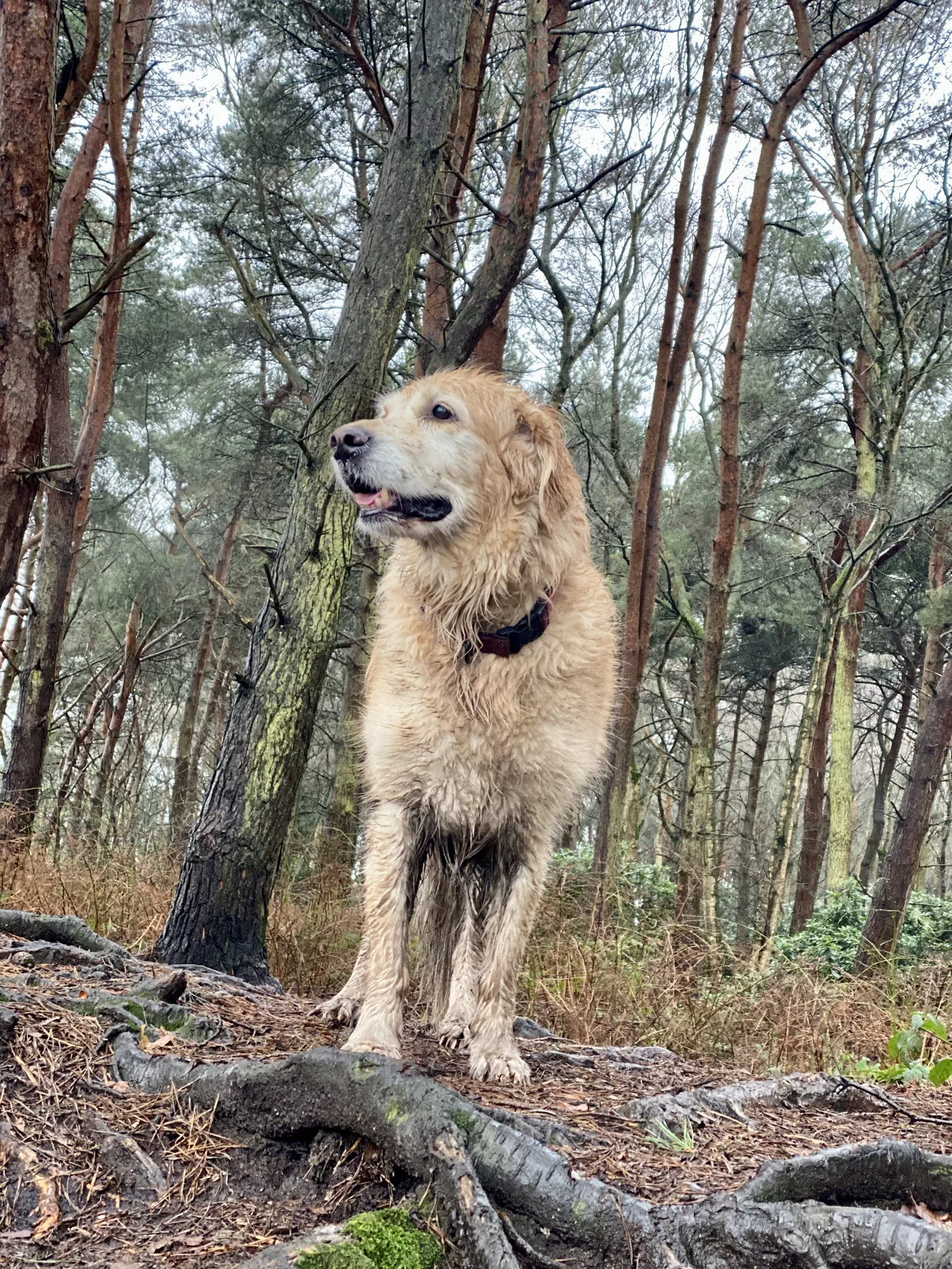
Muddy paws and wet feathering are part of life. Drying after wet walks and keeping the coat comfortable takes time.
SIZE & EVERYDAY LIFE
SPACE & EQUIPMENT
Beds, bowls, storage, toys and a place to settle all take room, even when the home itself is not large.
ONGOING COSTS
Budget for food, insurance, routine veterinary care, unexpected treatment and the needs of a medium-to-large dog.
TRAVEL & CARE
Think about car space, holidays, boarding, pet care and how your arrangements work when the dog cannot come with you.
REAL LIFE
Muddy paws, large wet dogs and a strong adolescent dog can change the rhythm of a household in ordinary, manageable ways.
HEALTH
Relevant areas can include hip dysplasia, elbow dysplasia, inherited eye conditions, PRA, ichthyosis and other conditions that may occur within the breed.
Responsible breeders use recognised health screening and pedigree information to help inform breeding decisions and reduce avoidable risk where possible. Health testing cannot guarantee a healthy puppy or remove every uncertainty.
A GOLDEN RETRIEVER MAY SUIT YOU IF...
You want a dog to be genuinely involved in family life
You enjoy walking and spending time outdoors
You are prepared to invest time in training
You can provide regular companionship and interaction
You do not mind shedding and regular grooming
You are comfortable with muddy paws and wet coats
You are prepared for the financial commitment of a medium-to-large dog
You want an affectionate and sociable companion
You are prepared for puppyhood and adolescence, not just the adult dog
You want to continue training and enriching your dog throughout its life
A GOLDEN RETRIEVER MAY NOT BE THE RIGHT FIT IF...
The dog would routinely spend very long periods alone
You want a very independent dog requiring little interaction
You want a low-maintenance coat
You strongly dislike dog hair around the home
You want a dog requiring minimal exercise or training
You are not prepared for the cost of a larger breed
You do not have time for consistent puppy training
You want a dog that fits into your life without changing your routine at all
CHILDREN & OTHER PETS
SUPERVISION
All dog-child interaction should be supervised, with a safe place for the dog to rest undisturbed.
TEACHING
Children need to learn how to behave around dogs, including when to give space and how to handle play.
INTRODUCTIONS
Puppies can be boisterous and existing pets need thoughtful, gradual introductions. Individual dogs differ.
THE LONG-TERM COMMITMENT
DAILY CARE
Exercise, feeding, grooming, training, rest and companionship remain part of the routine throughout life.
LIFE CHANGES
Work, family circumstances, moves and changing routines need to be considered before bringing a dog home.
VETERINARY & AGEING
Veterinary care, changing mobility and senior support are part of the commitment, not unexpected exceptions.
THE WHOLE LIFE
The goal is a relationship that makes space for the dog through every stage, not only the easy or photogenic ones.
The decision is not simply whether a puppy fits your life today, but whether you are ready to make space for that dog throughout every stage of its life.
STILL THINK A GOLDEN IS RIGHT FOR YOU?
If you have researched the breed, understand the commitment involved and feel a Golden Retriever would genuinely suit your lifestyle, we would love to learn more about the home you could offer.